326 learners bring Ke Nako! Festival of Voices to Curro Wilgeheuwel
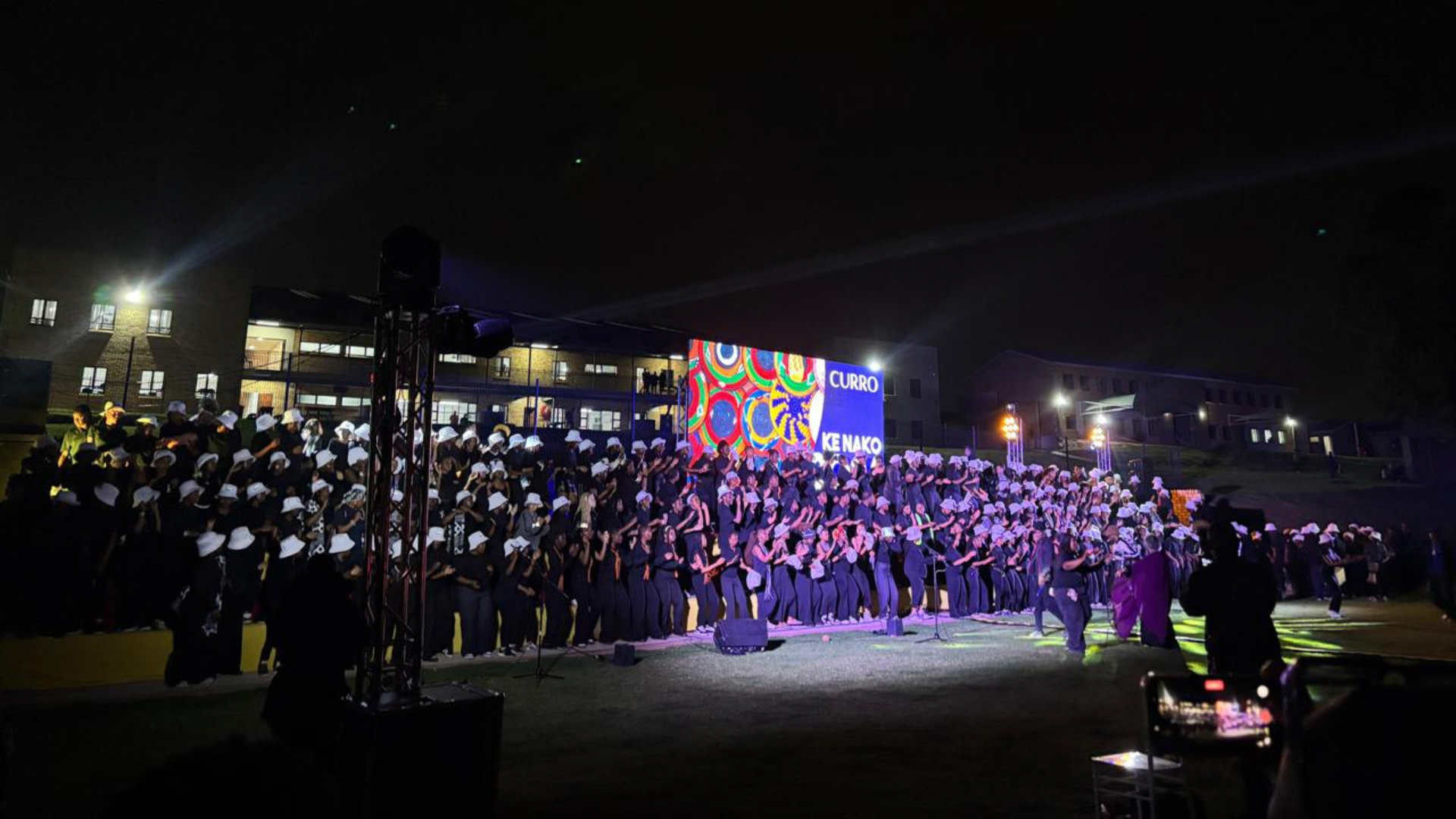
29 September 2026Curro Wilgeheuwel became a meeting point for 326 young voices during Heritage Month as 12 Curro schools gathered for the second Ke Nako! Festival of Voices.
Held under the theme ‘Intsha Inamandla’, the festival moved outdoors this year so families could share in the performances. Heavy winds eventually forced organisers to cut the programme short, although Executive Head Lisa Dowds said the atmosphere remained festive and feedback afterwards was very positive.
A festival shaped by Curro’s young people
Ke Nako! grew from a conversation among executive heads about the cultures and traditions represented across Curro schools.
‘Ke Nako! started off as a discussion at one of our executive head meetings a few years ago, where we realised that in all of our schools there is a wealth of talent and rich culture and traditions; why not all unite and get together to celebrate during Heritage Month,’ says Lisa.
The festival’s name carries that idea into its focus on learners. Lisa explains that ‘Ke Nako’ is derived from Sesotho and Setswana and loosely translates as ‘It is Time’ or ‘It is our time’.
‘In this instance, it is our youth’s time, the young voices in Curro.’
That emphasis shaped the programme. Schools used song, dance and dress to express their cultures, with learners sharing the stage in a non-competitive setting.
‘Strength in our youth’
This year’s theme, ‘Intsha Inamandla’, placed young people at the centre of the evening.
Lisa describes the isiZulu phrase as referring to the potential and energy of young people.
‘Intsha Inamandla is an isiZulu phrase that refers to the potential and energy of our young people, strength in our youth, and in the case of Ke Nako! this year, it is the strength of our learners’ powerful voices and the audience celebrating and supporting our youngsters and encouraging them to continue to grow from strength to strength. To me it refers to inspiration and hope.’
That idea also carried into how learners were encouraged to perform. Lisa hoped the festival would give them space ‘to perform with pride and self-confidence in who they are and where they come from’.
Looking ahead
With Ke Nako! now in its second year, Lisa would like to see more school choirs take part in future editions and use the festival to express their traditions and cultures through song and dance.
The weather may have shortened this year’s programme, but the idea that started the festival remains unchanged.
‘Ke Nako! is for our children and by our children.’